A family’s dental care rarely breaks down in a single moment. More often, it drifts: the practice chosen when the eldest child was a toddler is still the practice of record five years later, while everything about the household has changed around it. Catching that drift early affects health as well as the family’s schedule and paperwork.
The calendar shows the problem first
The family diary offers a simple test of an outdated dental arrangement. Open it and count the dental entries across a year. If the children attend one clinic, one parent sees a dentist near work, and the other parent has quietly stopped going at all, the household is running separate systems with separate sets of records. Each practice holds a fragment of the family’s history, and nobody holds all of it.
In most households one person carries the whole arrangement: booking around school hours, tracking which child is due for what. The load stays invisible until it fails, with a missed recall or a child who goes two years between check-ups because no reminder arrived.
That fragmentation has a clinical cost. Dental patterns run in families, including a tendency toward decay in childhood and gum trouble in adulthood, and a single practice that sees everyone can spot those patterns early. It also has a logistical cost, since every appointment can mean a different drive, reminder system, waiting room and bill. When the diary shows dental visits scattered across suburbs and days of the week, the arrangement is producing administrative work that a multi-practitioner family practice could absorb into one location and one file per person. The calendar often reveals the problem before anyone has a toothache.
The ages in the house have moved on
A practice that suited a family at one stage can be wrong for the same family later, simply because the people in it have aged and their needs have changed. The toddler who needed a gentle first check-up becomes a child whose jaw growth and alignment need watching, and the right time for an orthodontic evaluation is a judgment for the child’s own dentist to make. Baby teeth need attention in their own right, because decayed or prematurely lost deciduous teeth affect speech and nutrition, and can alter the path the permanent teeth take as they come through.
The teenage years bring their own list: wisdom teeth to monitor, orthodontic questions that become concrete, and contact sport that makes a custom-fitted mouthguard worth the appointment. A teenager who has seen the same dentist since childhood is more likely to keep attending once parental reminders stop.
At the other end of the age range, the needs change again. Adults may want cosmetic work, or find that early gum disease now needs regular maintenance, and older family members often face root decay, dry mouth linked to long-term medication, worn crowns and the upkeep of dentures. A single household can span several generations of dental needs at one dinner table. A practice that can carry a patient from the first tooth through to later life, without sending the family across town for every new stage, offers continuity that a single-focus clinic may not.
Someone has started dreading the visit
Avoidance often starts small. A child who cries the night before an appointment, who develops a stomach ache on the morning, or who goes silent in the car is communicating something the appointment book will never show. Adults do the same thing in a quieter way: a clean gets rebooked twice and then lapses altogether. If fear is deciding which appointments happen, the current setup needs attention before the fear becomes routine.
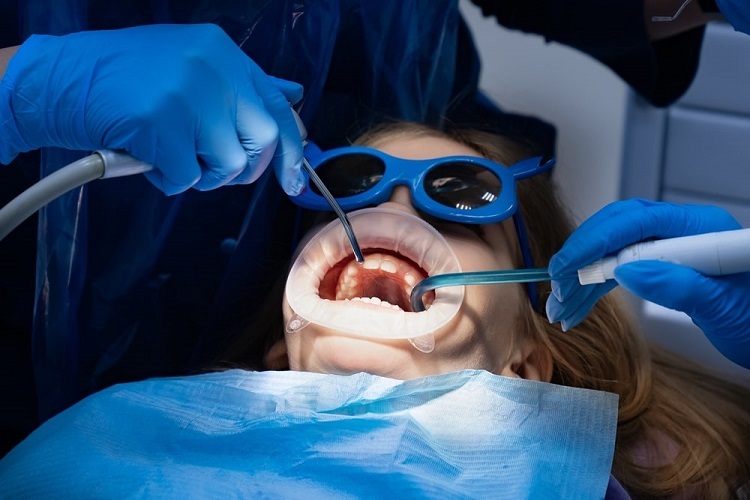
Good pediatric dentistry treats that fear as a clinical problem in its own right. Dentists who work well with children explain each step in plain words and show the instruments before using them. They also let the child set the pace where the procedure allows. For patients whose anxiety runs deeper, ask what support a practice offers, such as happy gas, before booking. Fear that goes unmanaged in childhood tends to harden into adult avoidance, and adult avoidance lets small, inexpensive problems grow.
Parents bring their own history into the room too, and a practice that works with families will notice tension and slow down for it. The aim is a child who grows up treating the dentist as a normal part of the year.
The trip takes longer than the appointment
Travel time decides more about attendance than many families expect. A practice that was five minutes away when the family moved in may now be forty minutes across town, and a clinic that only offers mid-morning weekday slots excludes anyone who works or attends school. Missed check-ups rarely happen because a family decides against them; they happen because the cost in time keeps rising until the appointment loses to everything else on the day. Early, evening and weekend slots are often what turn an intention into a kept appointment.
The appointment book matters as much as the map. A practice that sees siblings back to back, or a parent and child in the same hour, can reduce the number of trips. Parking and distance from school can seem minor, but they can turn a six-month recall into a nine-month one.
The practical fix is consolidation. For households near Chigwell, a search for family dentist chigwell helps when looking for a practice that can schedule several family appointments in one trip. The move also reduces the number of separate waiting rooms, bills and reminders a family has to manage.
The cost stays a guess until the invoice arrives
Delaying care can be unavoidable, but some of it is produced by the way a practice handles money: no written estimates and no real conversation about payment options. A family cannot budget for care it cannot price in advance.
Government support can change the cost of care for households with children. The Child Dental Benefits Schedule is a Medicare-funded program that covers basic dental services for eligible children, and a practice that participates in the scheme, and checks eligibility before treatment begins, can cut out-of-pocket costs to little or nothing for covered care. If the current dentist does not take part, or nobody at the front desk can say whether the children qualify, the family may be paying full price for care a subsidy would have covered. Uncertain costs can make families skip preventive visits that keep problems small, so clear fees affect care as well as budgeting and make those visits easier to plan.
Larger treatment needs the same clarity: a written, itemized plan lets a family stage work across the year, and many practices offer payment arrangements for exactly that situation.
Nobody knows the plan for a Saturday emergency
Dental emergencies keep their own hours. A knocked-out tooth at weekend sport, a toothache that flares on a public holiday, a broken filling before a work trip, and facial swelling that appears overnight do not wait for a weekday slot. A knocked-out permanent tooth in particular has a short window in which prompt care gives the best chance of saving it. Who would the family call?
The general guidance for a knocked-out permanent tooth is worth knowing before it is needed: pick it up by the crown and put it back in its socket if you can; if that cannot be done, keep it briefly in a little milk or saliva so it does not dry out, then get to a dentist as quickly as possible. Baby teeth are a different case and should not be pushed back in. Either way, speed depends on knowing where to go.
Many households have no answer ready, and the gap only becomes obvious in the moment. A practice that holds same-day slots for urgent cases, or that keeps a clear after-hours arrangement, removes the scramble for help while someone is in pain. Ask any practice, current or prospective, before an emergency happens, what happens when a patient calls with an emergency on a Saturday morning. The response shows how the practice handles urgent care.
Every visit ends in a fix and never in a lesson
A family practice should be judged partly by what never needs treating. Preventive dentistry, including examinations, professional cleanings, sealants and fluoride where indicated, protects a family’s oral health by keeping small issues small. It should also come with coaching: a hygienist who shows a child how to brush around a new molar, or a dentist who talks through the habits that drive decay. If the only contact a family has with its practice is the occasional filling, the education half of the job is going undone.
Prevention keeps paying off as well. A fissure sealant on a decay-prone molar can help prevent the need for a filling, and a child coached in brushing technique carries that skill for decades.
The mouth can also give early warnings about the rest of the body. Persistent bad breath can be an early sign of gum disease, and gum disease has established links with conditions such as diabetes and cardiovascular disease. A dentist who checks the gums carefully at every visit, and explains what the measurements mean, is looking after the family’s general health and its teeth at the same time.
Switching practices without losing continuity
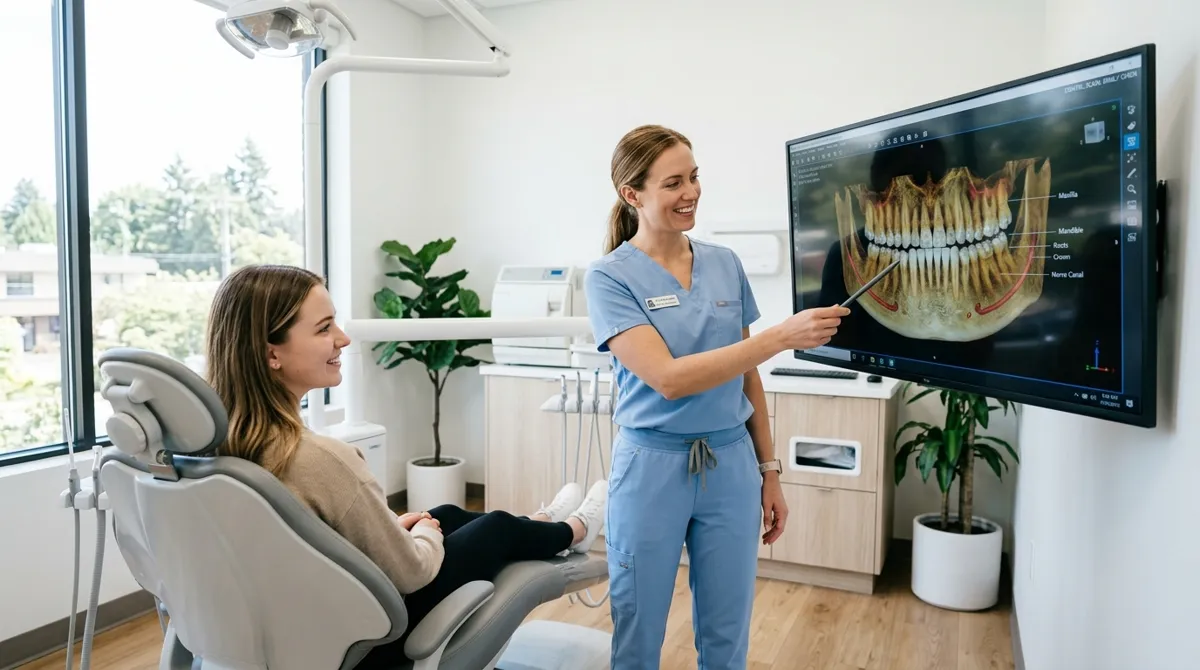
Changing practices sounds harder than it is. Records and existing X-rays can be requested and transferred, and the transfer matters, because the new dentist should be able to see the history of each tooth before making plans for it. Check the children’s eligibility for the Child Dental Benefits Schedule before the first visit, and mention any anxiety at the time of booking so extra time can be allowed. Ask, too, how the practice handles urgent cases outside normal hours. The technology question belongs on the list: low-radiation digital X-rays and intraoral cameras that let patients see what the dentist sees make a real difference to comfort and to the conversation about treatment.
Give the new practice a full cycle before judging it, and notice whether the same dentist appears each time; continuity has long-term value. Booking the whole family into a single block of appointments on one day is the simplest test of the new arrangement.
Dental care is one of those household arrangements, like insurance or school planning, that repays a review from time to time. A working arrangement is usually quiet: appointments get kept, nobody dreads them, emergencies have a plan, and the diary lists one address.